
 Back to All Performance Assessments
 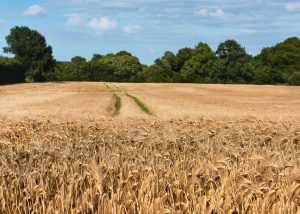 Image copyright: iStock Photo
Wheat
 France Central
CA-SYS: Assessing pesticide-free agroecological cereal-based cropping systems
Performance assessment
To assess pest management, productivity and economic profitability in pesticide-free agroecological cereal-based systems
| Common name | Scientific name | Pest type |
|---|---|---|
|
Septoria leaf blotch |
Zymoseptoria tritici |
Fungal diseases |
|
Yellow rust |
Puccinia striiformis |
Fungal diseases |
|
Brown leaf rust of cereals |
Puccinia recondita |
Fungal diseases |
|
Weeds |
|
Weeds |
Standard practice:
The reference cropping systems are the cereal-based cropping systems of neighbor farmers (distinguishing conventional and organic systems). The main crops of the conventional reference cropping systems are winter wheat, winter barley, oilseed rape, spring barley, sunflower). Management of those crops are typical for the region, with pest management mostly based on chemical control.
Herbicides |
Fungicides/Insecticides |
||
| Amidosulfuron | Imazamox | Azoxystrobine | Prothioconazole |
| Aminopyralide | Iodosulfuron-methyl-sodium | Benzovindiflupyr | Tebuconazole |
| Bentazone | Mesosulfuron-methyl | Bixafen | Trifloxystrobine |
| Clethodime | Metazachlore | Cyprodinil | Cyantraniliprole |
| Clodinafop-propargyl | Metsulfuron methyl | Difenoconazole | Deltamethrine |
| Clomazone | Pendimethaline | Fludioxonil | Diflufenicanil |
| Dicamba | Picolinafen | Fluopyram | Esfenvalerate |
| Dimethachlore | Pinoxaden | Fluxapyroxade | Etofenprox |
| Dimethenamid-P | Prosulfocarbe | Isofetamid | Lambda-cyhalothrine |
| DMTA-P | Quinmerac | Méfentrifluconazole | Phosmet |
| Fenoxaprop-p-ethyl | Quizalofop-p-ethyl | Prochloraze | Zetacypermethrine |
| Fluazifop-p-butyl | S-metolachlore | ||
| Flufenacet | Thiencarbazone-methyl | ||
| Fluroxypyr | Thifensulfuron-methyl | ||
| Glyphosate | Tribenuron-methyl | ||
| Halauxifene-methyl |
ADOPT-IPM solution:
The pesticide-free agroecological system tested on the research station was designed to optimize pest control without the solution of chemical control. The cropping system is based on a long crop rotation (including winter / spring / summer crops of various taxonomic families, and wheat as a major cash crop), without any chemical pesticide (except low-impact molluscicide), with occasional inversion tillage and shallow tillage as necessary for managing weeds, slugs, and other pests, including mechanical weeding.
Experimental design
On-station system experiment
Replications
11 field plots = 11 replicates
Plot size
Package#1: each individual plot is [6.4 – 12] ha Package#2: each individual plot is [1.5 – 4] ha
Trial Duration
2019 – 2023
Location
Dijon (eastern France), INRAE experimental farm at Epoisses. Calcareous clay soil, 60-90 cm deep.
Randomization Procedure
The 44 plots were split into 3 ‘landscapes’ (Landscape 1: Conservation Agriculture; Landscape 2: Systems with tillage only; Landscape 3: mix of plots with Conservation Agriculture and of plots with soil tillage). Then plots within a landscape were randomly allocated to the 4 cropping systems.
Sample size justification
All the 44 plots of the experimental farm are used for the experiment.
Ethical considerations
The ‘Control’ plots are the cropping systems and field plots of conventional and organic neighbor farmers. All farmers agreed to contribute to the research program. All results are anonymous so that farmers cannot be identified.
Data collection
All details of crop management
Crop yields
Weeds: identification of weed species, assessment of abundance of each weed species before/after (non-chemical) weeding
Invertebrate pests: counts of individuals at relevant growth stages
Diseases: visual assessment of crop diseases at relevant growth stages
Additional notes
Information on results for the indicators below are available
Indicators:
Gross product (Euros/ha): indicator of productivity (in value)
Semi-net Margin (Euros/ha): indicator of profitability (=gross product – input costs – equipment costs). Labor costs are not considered.
Work load (hours per ha). Only in-field operating time (monitoring, road transport, tools setting, paper work, are not included)
Greenhouse gas emissions (eq. CO2 per ha), estimated with the GESTIM method
All indicators were computed by the AGROSYST information systems, based on all the details of cropping systems.
Overall Performance
Packages are compared by their Performance (displayed in the bar charts and summarised by the Utility score) and their Pesticide Load Index (PLI). Higher Performance/Utility and lower PLI indicate more favourable results.
Compare Packages
| Package | Utility | Pesticide Load Index |
|---|---|---|
|
Baseline |
71% |
1.14 |
|
ADOPT-IPM |
56% |
0.00 |
Summary
The overall utility of the Current Commercial Practice (CCP) was significantly higher than the ADOPT package due to lower crop loss, better health and safety performance and lower time and management required. However, the environmental impact of the ADOPT package was judged significantly lower than for CCP. The PLI and societal costs of the CCP were much greater than for the ADOPT-IPM approach, which had zero scores, but the losses would probably mitigate against the full scale adoption of this strategy.
Performance by indicator
Compare Packages
| Package | Utility |
|---|---|
|
Baseline |
74% |
|
ADOPT-IPM |
50% |
Notes
Although losses occurred with both packages the ADOPT package generally performed far less well than the CCP.Compare Packages
| Package | Utility |
|---|---|
|
Baseline |
74% |
|
ADOPT-IPM |
50% |
Notes
There were greater health and safety risks to operators in the ADOPT package due to the different machinery which was generally heavier ploughs and mechanical weeders, as well as more danger from the weed cutters.Compare Packages
| Package | Utility |
|---|---|
|
Baseline |
74% |
|
ADOPT-IPM |
70% |
Notes
Direct losses were not very different for the two packages with the ADOPT package only coming out slightly lower because of uncertainty about the costs as changes in availability of equipment occur.Compare Packages
| Package | Utility |
|---|---|
|
Baseline |
50% |
|
ADOPT-IPM |
95% |
Notes
The ADOPT package significantly outperformed the CCP due to lower greenhouse gas emissions and from reduced cultivation and lower risk of nitrate pollution from reductions in fertiliser use.Compare Packages
| Package | Utility |
|---|---|
|
Baseline |
74% |
|
ADOPT-IPM |
30% |
Notes
For the CCP package the additional time and high seasonality required for cultivations is reduced in the ADOPT package and but mechanical weeding was time consuming. And additional crop walking and monitoring also required additional resource.Compare Packages
| Package | Utility |
|---|---|
|
Baseline |
74% |
|
ADOPT-IPM |
30% |
Notes
The CCP makes the implementation significantly easier, as the supply chains and cooperatives already exist and farmers are familiar with using existing crop protection products. Many growers rely on advisors to make decisions so their some reliance on outside collaboration. The ADOPT approach results in more complex market chains with different crops grown and sourcing varieties with resistance traits can be difficult. Availability of advice on best to integrate these elements is also more difficult to access.Pesticide Load Index (PLI)
| PLI Sub-Indicator | Baseline | ADOPT-IPM | Notes |
|---|---|---|---|
| Human Health | 0.95 | 0 |
Pesticide Load Index (PLI) is calculated based on the toxicity and the amount of the active ingredient(s) applied as part of each package. A higher PLI indicates higher risk to the relevant sub-indicator (human health, ecotoxicity or environmental fate). Scale from 0-1.5, with 0 being no impact and 1.5 being the highest impact. CCP Societal costs €36.17/ha For the full breakdown of pesticide load and costs, from the Pesticide Impact Explorer tool developed by Aarhus University, click here. |
| Ecotoxicity | 1.68 | 0 | |
| Environmental Fate | 0.79 | 0 |