
 Back to All Performance Assessments
 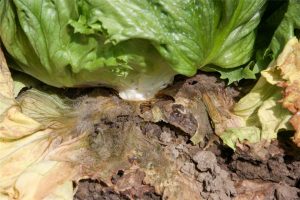 Image copyright: Gerald Holmes, Strawberry Center, Cal Poly San Luis Obispo/via Bugwood.org - CC BY-NC 3.0 US
Lettuce
 Italy (Northern)
Effectiveness of soil treatment compared with current practices on reducing root disease development
Performance assessment
The purpose of the field trial is to evaluate the effectiveness of the ADOPT-IPM packages in comparison with the farmer’s current practices. In particular, the effects on crop development and the containment of soil-borne diseases will be considered.
| Common name | Scientific name | Pest type |
|---|---|---|
|
Soil born pathogens |
Fusarium oxysporum f. sp. lactucae, Sclerotinia minor, Pythium sp. |
Soilborne diseases |
1. Untreated control, in which no fungicide application is done against the target disease.
2. Standard practice (the usual growers’ practice for controlling the target pests. In this case fungicide based on: cipronidil and fludioxionil)
3. ADOPT-IPM Package 1: ANT_Biochar (10% v/v) (soil treatment in nursery);
4. ADOPT-IPM Package 2: ANT_Compost (10% v/v) (soil treatment in nursery)
5. ADOPT-IPM Package 3: ANT_VA (0.2-0.3%) (soil treatment in nursery and in field) + ANT_NT (0.05-0.1%) (soil/foliar treatment in nursery and in field) + ANT_PT (0.1%) (foliar treatment in nursery and in field).
Comparison in ‘Outputs’ compares treatment 2 (baseline) and treatment 4 (ADOPT-IPM)
Replications
Five replications per thesis
Plot size
18 m²
Trial Duration
Five months
Planned start date: August 2024
Planned end date: September 2024C
Calendar
August: sowing and treatments in nursery;
Late August: Transplanting and start of treatments in field;
September: crop development and disease assessments;
Late September: Demo day; end of trial.
Location
Str. Vicinale del Boglio, 9, 12033 Moretta (CN) Italy. (44.78223761288679, 7.51626573005761)
Other Agronomic Practices
One insecticide treatment (deltamethrin-based) applied throughout the tunnel at mid-crop cycle.
Data Collection
Assessment of crop development and production (grow index, height and plant weight). Assessment root disease development (incidence and severity of diseases). Bulk soil and rhizosphere sampling for evaluation of effects on the soil microbiome.
Statistical Methods
One-way ANOVA with Tukey’s post-hoc test.
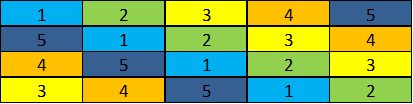
Experimental Design - field layout
Overall Performance
Packages are compared by their Performance (displayed in the bar charts and summarised by the Utility score) and their Pesticide Load Index (PLI). Higher Performance/Utility and lower PLI indicate more favourable results.
Compare Packages
| Package | Utility | Pesticide Load Index |
|---|---|---|
|
Baseline |
69% |
- |
|
ADOPT-IPM |
84% |
- |
Summary
The overall perfomance of the ADOPT-IPM package was better than the Current Commercial Practice package. This was a result of the ADOPT-IPM package providing similar results to CCP in terms of crop protection but greater improvements across all other indicators, particularly those associated with the environment, direct costs, and co-ordination requirements (i.e. training or contracting of pesticide applicators which is not necessary from handling composts).
Performance by indicator
Compare Packages
| Package | Utility |
|---|---|
|
Baseline |
74% |
|
ADOPT-IPM |
74% |
Notes
Results from the IPM package compared well with current commercial practiceCompare Packages
| Package | Utility |
|---|---|
|
Baseline |
70% |
|
ADOPT-IPM |
95% |
Notes
ADOPT-IPM package presented lower human health risk because of reduced need for PPE in hot protected environment. Increase in confidence could be achieved by analysis of compost for human pathogens.Compare Packages
| Package | Utility |
|---|---|
|
Baseline |
70% |
|
ADOPT-IPM |
95% |
Notes
CPP direct costs were low but with medium confidence because of lack of knowledge about variability across the industry between different locations and systems. For the IPM package, not using fungicides saved money (ANT Compost was 5€ per 20kg)Compare Packages
| Package | Utility |
|---|---|
|
Baseline |
50% |
|
ADOPT-IPM |
95% |
Notes
For the ADOPT package, there very low impact on the environment and compost enhances soil health (physical, chemical and biological)Compare Packages
| Package | Utility |
|---|---|
|
Baseline |
74% |
|
ADOPT-IPM |
95% |
Notes
Adding compost at the nursery stage was simple and easy to implement in the ADOPT IPM package compared with fungicide application in CCPCompare Packages
| Package | Utility |
|---|---|
|
Baseline |
70% |
|
ADOPT-IPM |
95% |
Notes
CCP package is a well established approach not requiring support however a medium confidence was given because of different attitudes of growers. Training and certification of applicators required. For ADOPT, training and certification is not required to apply compost; any farm worker can do this.Pesticide Load Index (PLI)
| PLI Sub-Indicator | Baseline | ADOPT-IPM | Notes |
|---|---|---|---|
| Human Health | - | - |
Pesticide Load Index (PLI) is calculated based on the toxicity and the amount of the active ingredient(s) applied as part of each package. A higher PLI indicates higher risk to the relevant sub-indicator (human health, ecotoxicity or environmental fate) |
| Ecotoxicity | - | - | |
| Environmental Fate | - | - |