
 Back to All Performance Assessments
 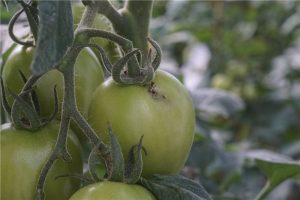 Image copyright: CABI
Tomato
 Spain (Eastern)
Comparing standard practice to release of predatory mites and parasitoids to control Aculops lycopersici and Tuta absoluta
Performance assessment
| Common name | Scientific name | Pest type |
|---|---|---|
|
Tomato russet mite |
Aculops lycopersici |
Arthropod Pests |
|
Tomato leafminer |
Tuta absoluta |
Arthropod Pests |
- Standard practice: insecticides combined with conservation biological control.
- Adopt-IPM solution: conservation biological control + releases of predatory mites and parasitoids.
1. Standard practice: insecticides combined with conservation biological control.
a) Sulfur
b) Bacillus thuringiensis
2. Adopt-IPM solution with releases of:
a) Predatory mite: Transeius mondorensis
- First preventive release (60 indiv./m2)
- Releases every two weeks with alternative preys (25 indiv./m2)
- very low levels of A. lycopersici
b) Parasitoid: Dolichogenidea gelichiidivoris
- Parasitism below 30% -> releases of 0.5 parasitoids/plant
- Week six -> 61% of parasitism
Experimental Design
2 plots (standard and IPM)
Replications
1 per treatment
Plot size
50 m2
Trial Duration
Start date: 1st April 2024
End date: 1st July 2024
Demo day: mid July 2024
Location
IRTA Caprils (Barcelona), Spain: 41º 30’ 59’’N – 0º 37’56’’E
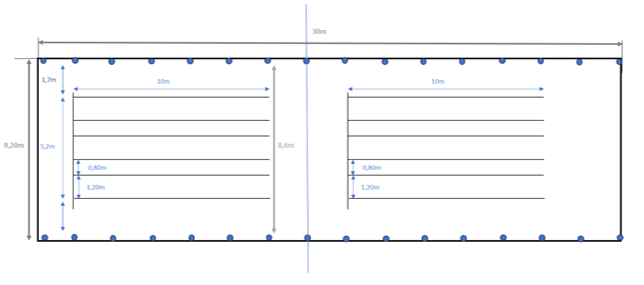
Greenhouse layout
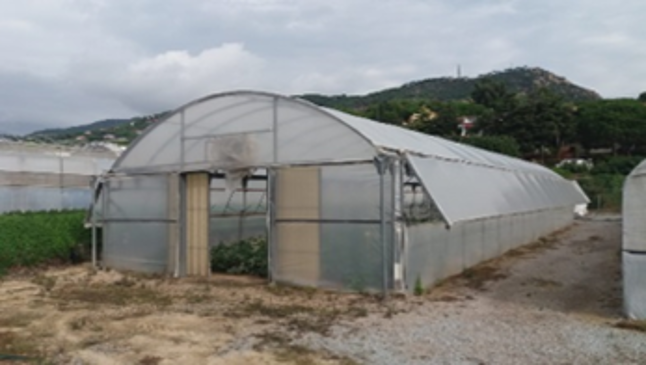
Greenhouse
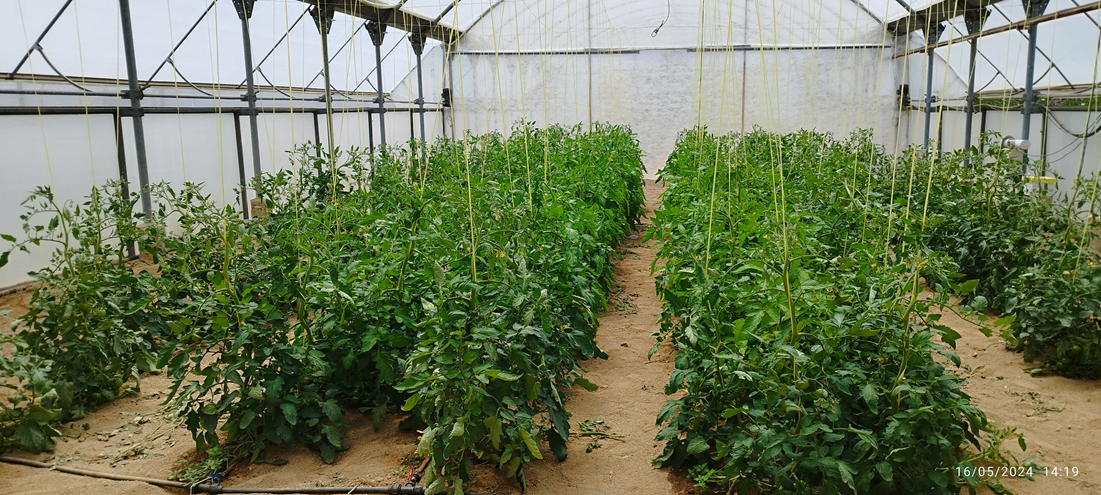
Greenhouse
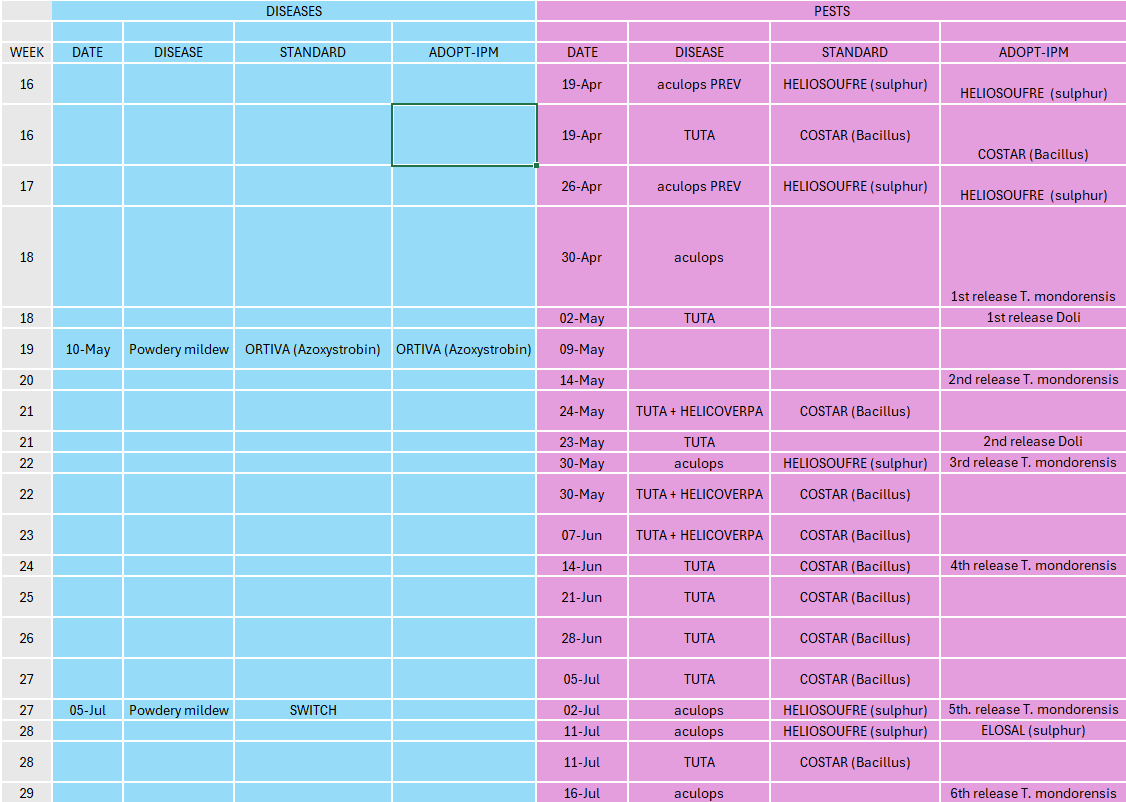
Intervention schedule
Overall Performance
Packages are compared by their Performance (displayed in the bar charts and summarised by the Utility score) and their Pesticide Load Index (PLI). Higher Performance/Utility and lower PLI indicate a better package.
Compare Packages
| Package | Utility | Pesticide Load Index |
|---|---|---|
|
Baseline |
68% |
- |
|
ADOPT-IPM |
68% |
- |
Summary
The overall utility of both the Current Commercial Practice (CCP) and the ADOPT packages were identical. However, the negative environmental impact of the ADOPT package was lower than for CCP however this was balanced by the increased coordination requirements which were greater for the ADOPT package
Performance by indicator
Compare Packages
| Package | Utility |
|---|---|
|
Baseline |
74% |
|
ADOPT-IPM |
74% |
Notes
Both packages performed well against the loss indicatorCompare Packages
| Package | Utility |
|---|---|
|
Baseline |
98% |
|
ADOPT-IPM |
98% |
Notes
Both packages performed equally well in terms of health and safety, however no PPE was required for the ADOPT package which would involve less heat stress for the application of BCAs versus pesticide use in CCPCompare Packages
| Package | Utility |
|---|---|
|
Baseline |
50% |
|
ADOPT-IPM |
50% |
Notes
In CCP, pesticide costs and their application can be high depending weather and pest pressure. The costs were broadly similar between ADOPT and CCP but consisted of different cost components (BCAs vs Pesticides applications)Compare Packages
| Package | Utility |
|---|---|
|
Baseline |
50% |
|
ADOPT-IPM |
74% |
Notes
For CCP, Difference in attitudes between growers = Medium confidence. For ADOPT, some environmental impact arises from humidity requirement for Aculops’ predatory mites which need to be high to be effective; this requires extra water useCompare Packages
| Package | Utility |
|---|---|
|
Baseline |
27% |
|
ADOPT-IPM |
27% |
Notes
For CCP, doing all the pesticide sprays was very time consuming and if alternatives were available these would be adopted because of Time and Management pressures . For the ADOPT package, there were broadly similar demands to CCP but the breakdown of activities was different (different skillsets, time to do activities, etc.)Compare Packages
| Package | Utility |
|---|---|
|
Baseline |
74% |
|
ADOPT-IPM |
26% |
Notes
In CCP, little coordination was required as historical benefits of extension activities (e.g. use and timing of natural enemies) have already influenced pest management practice leadng to a high degree of independence. For the ADOPT package, predatory mites require high levels of monitoring and external coordination with the companies providing timely delivery of BCAsPesticide Load Index (PLI)
| PLI Sub-Indicator | Baseline | ADOPT-IPM | Notes |
|---|---|---|---|
| Human Health | - | - |
Pesticide Load Index (PLI) is calculated based on the toxicity and the amount of the active ingredient(s) applied as part of each package. A higher PLI indicates higher risk to the relevant sub-indicator (human health, ecotoxicity or environmental fate) |
| Ecotoxicity | - | - | |
| Environmental Fate | - | - |